Iran War’s Inflation Impact: Energy Prices Surged In Largest Gain Since 2005
ByTy Roush, Forbes Staff.
The largest single-month gain for energy prices in decades lifted inflation by nearly a full percentage point in March, according to federal data released Friday, the first insight into how the Middle East conflict disrupted the U.S. economy.
Key Facts
Consumer prices jumped 3.3% from March 2025 and 0.9% between February and March, the Bureau of Labor Statistics reported, just under consensus analyst estimates of an annual 3.4% increase, according to FactSet.
The last time CPI rose by at least a full percentage point in a single release was between March and April 2021, when year-over-year inflation rose from 2.6% to 4.2%.
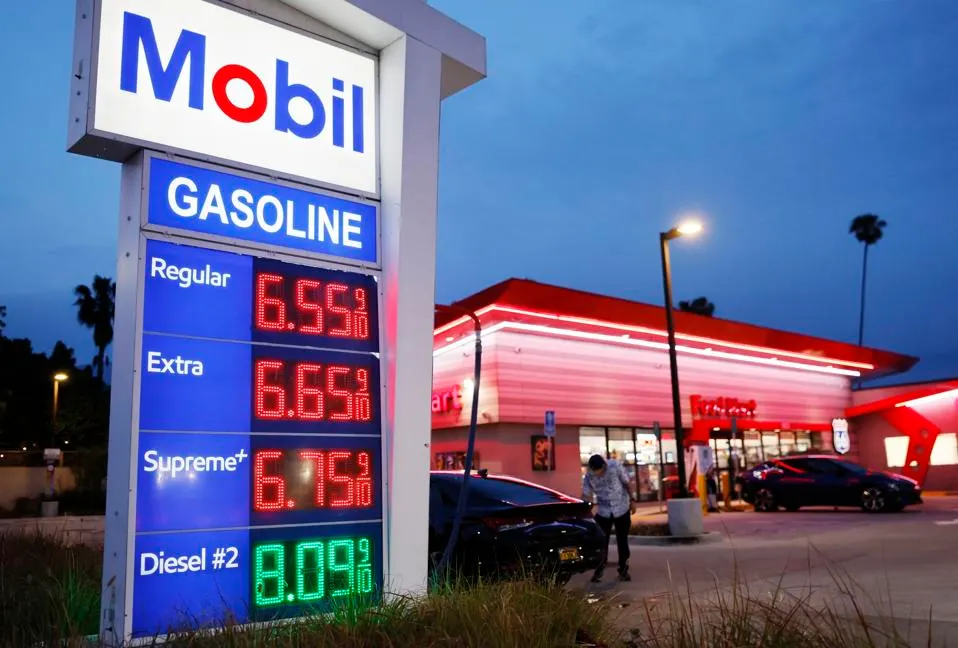
The energy index—tracking consumer prices for fuel and utilities, like gasoline—increased 12.5% year-over-year, including an 18.9% annual increase for gasoline prices and a 44.2% surge in fuel oil costs, the largest increase among all items tracked by the Bureau of Labor Statistics.
A 10.9% monthly increase in the energy index is its largest since 2005, lifted by surges of 21.2% and 30.7% in gasoline and fuel oil, respectively.
Core CPI, an inflation measure excluding the volatile food and energy markets, rose 2.6% annually, below the consensus for a 2.7% increase.
Crucial Quote
Kathy Bostjancic, Nationwide’s chief economist, wrote in a note: “Even if a long-lasting deal to end the war is reached and the Strait of Hormuz is fully reopened, it would take months for oil, gasoline, diesel and other commodity supplies to snap back to pre-war levels and thus for prices to settle back to pre-conflict levels.”
What To Watch For
The Bureau of Economic Analysis will report personal consumption expenditures index data, the Federal Reserve’s preferred inflation gauge, on April 30. The agency reported on Thursday that annual inflation hit 3% in February, down from 3.1% in January, as personal income dropped by 0.1% in the month, falling below expectations for a monthly 0.4% increase.
How Will The Federal Reserve React?
The central bank is unlikely to favor interest rate cuts following an uptick in inflation. Several Federal Reserve officials have warned in recent weeks that inflation needs to show signs of moving toward its 2% goal, though many have said it is too soon to know how consumer prices were affected by the Iran war. Fed Chair Jerome Powell, who spoke after policymakers voted to hold interest rates between 3.5% and 3.75%, said without an improvement in inflation, “then you won’t see [an interest] rate cut.”
Key Background
Wall Street anticipated a shocked energy market to disrupt consumer prices, with many analysts warning that a prolonged Iran war could lead the U.S. toward a recession. Oil prices briefly plunged after President Donald Trump announced a ceasefire earlier this week, yet concerns over the deal and criticism from American allies have once again fueled an increase in fuel costs. A broader increase in energy and utility costs over the last year is a step away from promises made during Trump’s presidential campaign, during which Trump said he would lower energy prices by as much as 50%. Even before the war, electricity prices increased by more than 6% in the 12 months ending January 2026, more than double the headline inflation rate of 2.5%. The average prices of residential electricity in the U.S. rose from just under 16 cents per kilowatt hour in January 2025 to 17.78 cents per kilowatt hour in November, an 11.5% increase after rising just 3.4% from 2024 to 2025.